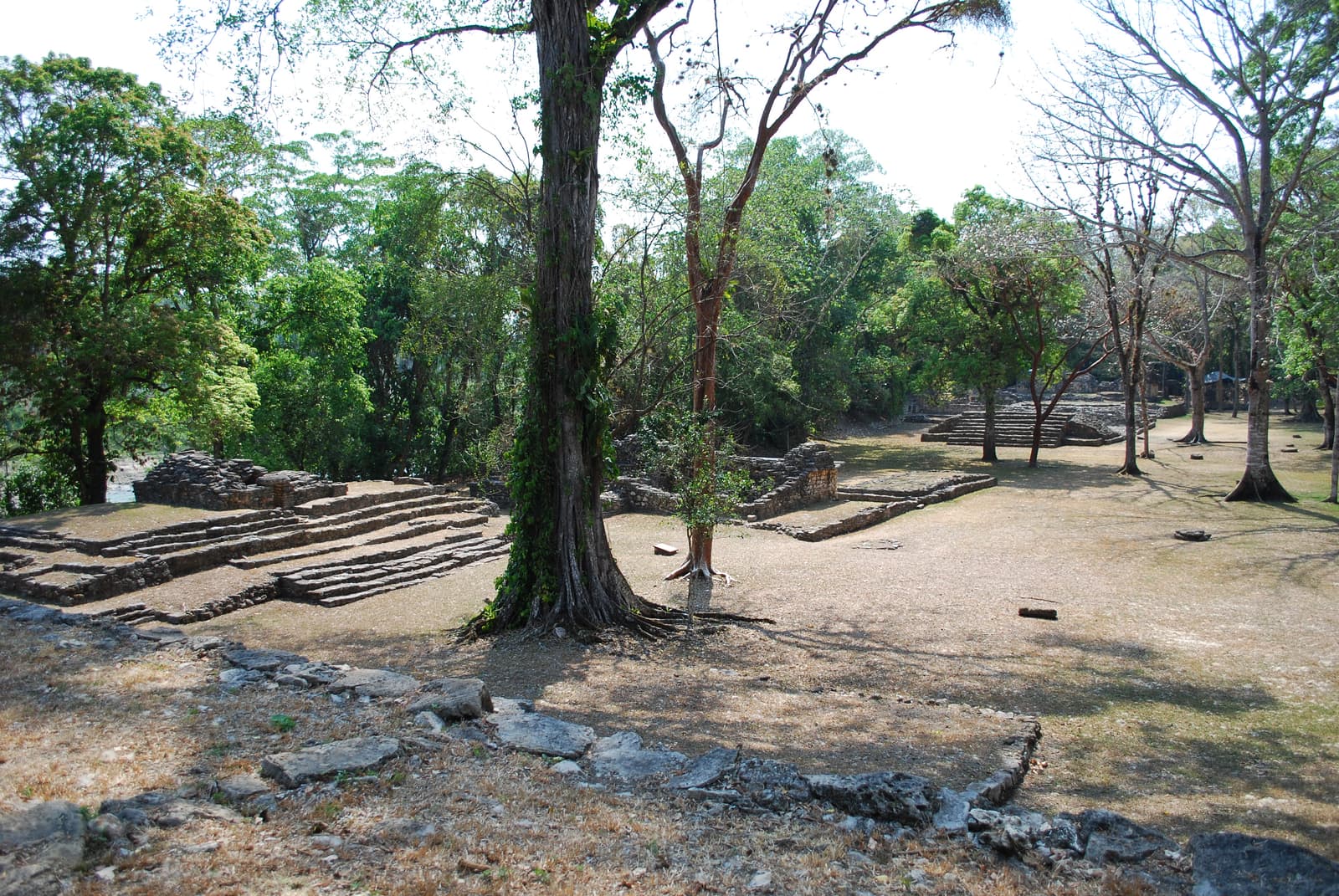
Yaxchilán lies in the municipality of Ocosingo, in the far east of Chiapas, on the south bank of the Usumacinta river that forms the border with Guatemala. It is one of the great Classic Maya cities, famous for its carved lintels and its setting, and it is protected by Mexico’s INAH. It receives far fewer visitors than Palenque — partly because the only way in is by boat.
A short history
Yaxchilán — known to its rulers as Pa’ Chan — was settled by the Early Classic period and grew into a regional power in the 7th and 8th centuries AD, controlling trade on the Usumacinta and competing with Piedras Negras, a few hours downstream in today’s Guatemala. Its golden age came under Itzamnaaj Bahlam III (“Shield Jaguar the Great”), who ruled for some six decades until 742, and his son Yaxuun Bahlam IV (“Bird Jaguar IV”, ruled 752–c. 768), whose monuments fill the site. Shield Jaguar’s wife, Lady K’ab’al Xook, was commemorated in the famous lintels of Structure 23. The last known inscriptions date from the early 9th century, after which the city, like others in the region, was abandoned. Explorers reached it in the 19th century — Alfred Maudslay and Désiré Charnay both arrived in 1882 — and Teobert Maler later gave it the name Yaxchilán, “green stones”.
How long do you need?
- One long day — the classic day tour from Palenque with Bonampak.
- Two days — the version we recommend, with a night in the jungle at Lacanjá Chansayab or on the river at Frontera Corozal.
- Plus two days in Palenque for its ruins and waterfalls, whichever you choose.
Getting there
About three hours by road from Palenque to Frontera Corozal, then a boat down the Usumacinta. Our getting here guide covers tours, colectivos and private transfers, and the site guide walks you through the ruins.
What to see
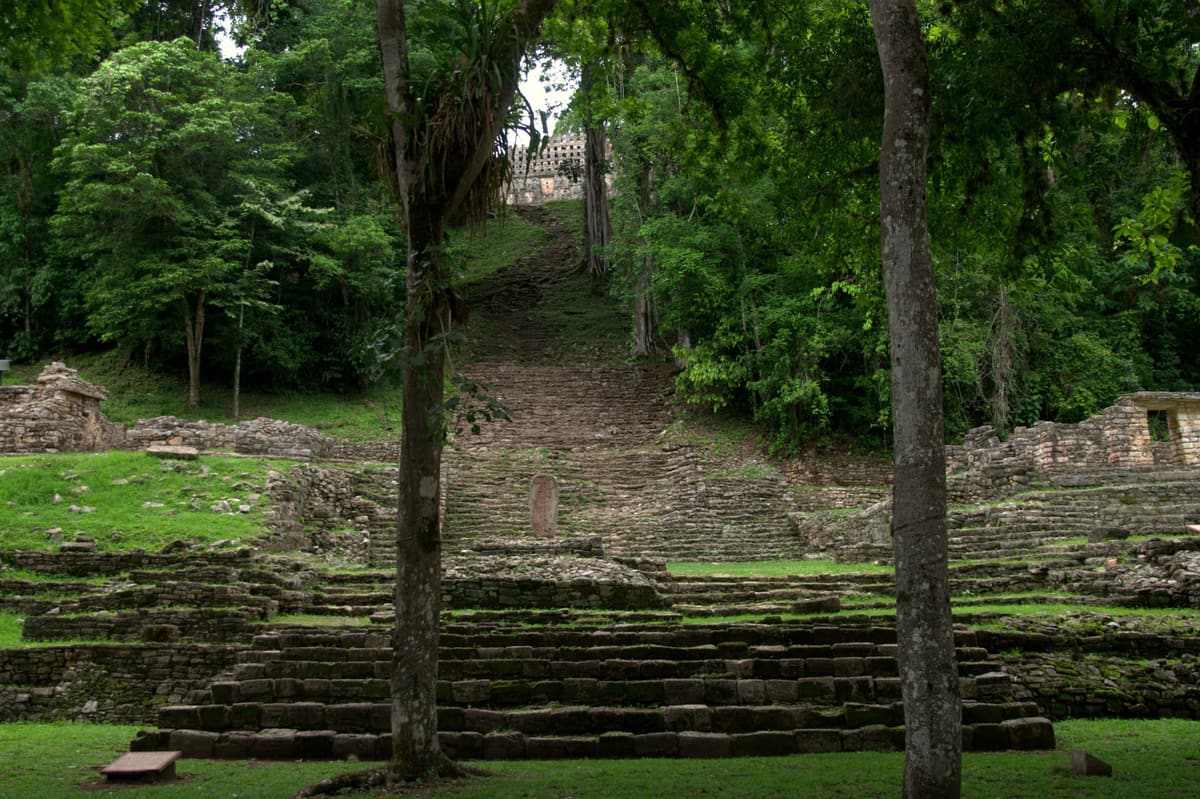 Yaxchilán archaeological zone
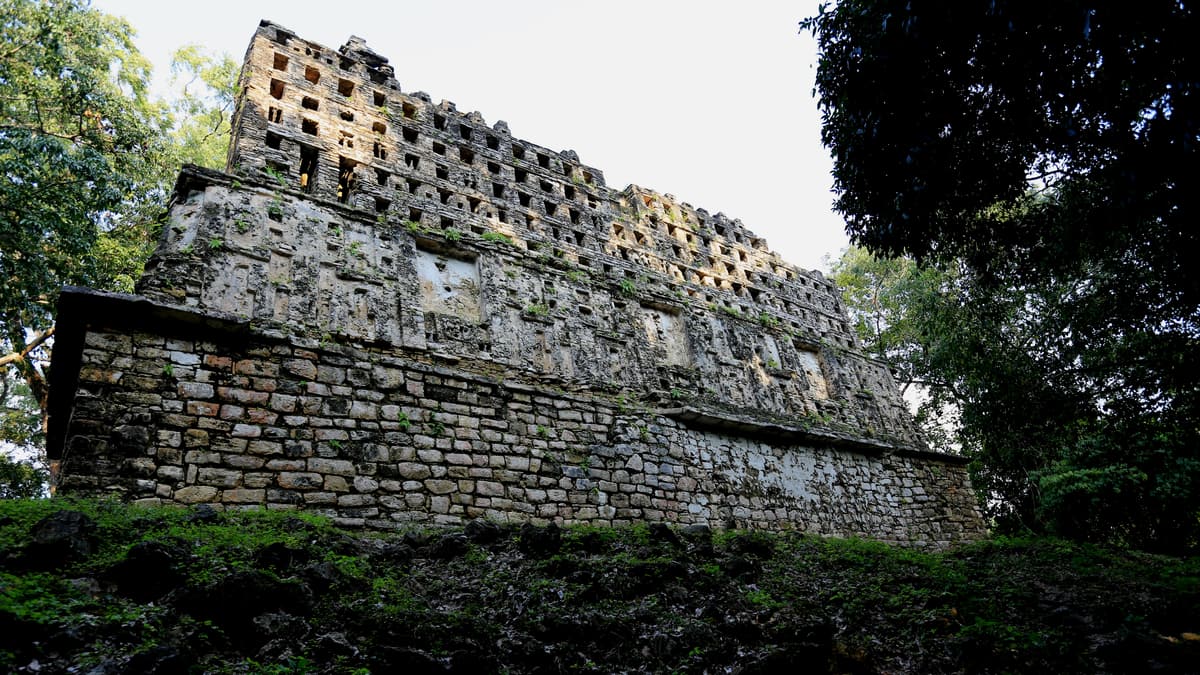 Yaxchilán archaeological zone
Structure 33
The temple of Bird Jaguar IV
The masterpiece of Yaxchilán: a temple high above the Grand Plaza with a pierced roof comb, three carved lintels over its doorways and a hieroglyphic stairway showing the king playing the ballgame. Inside sits his headless stone statue.
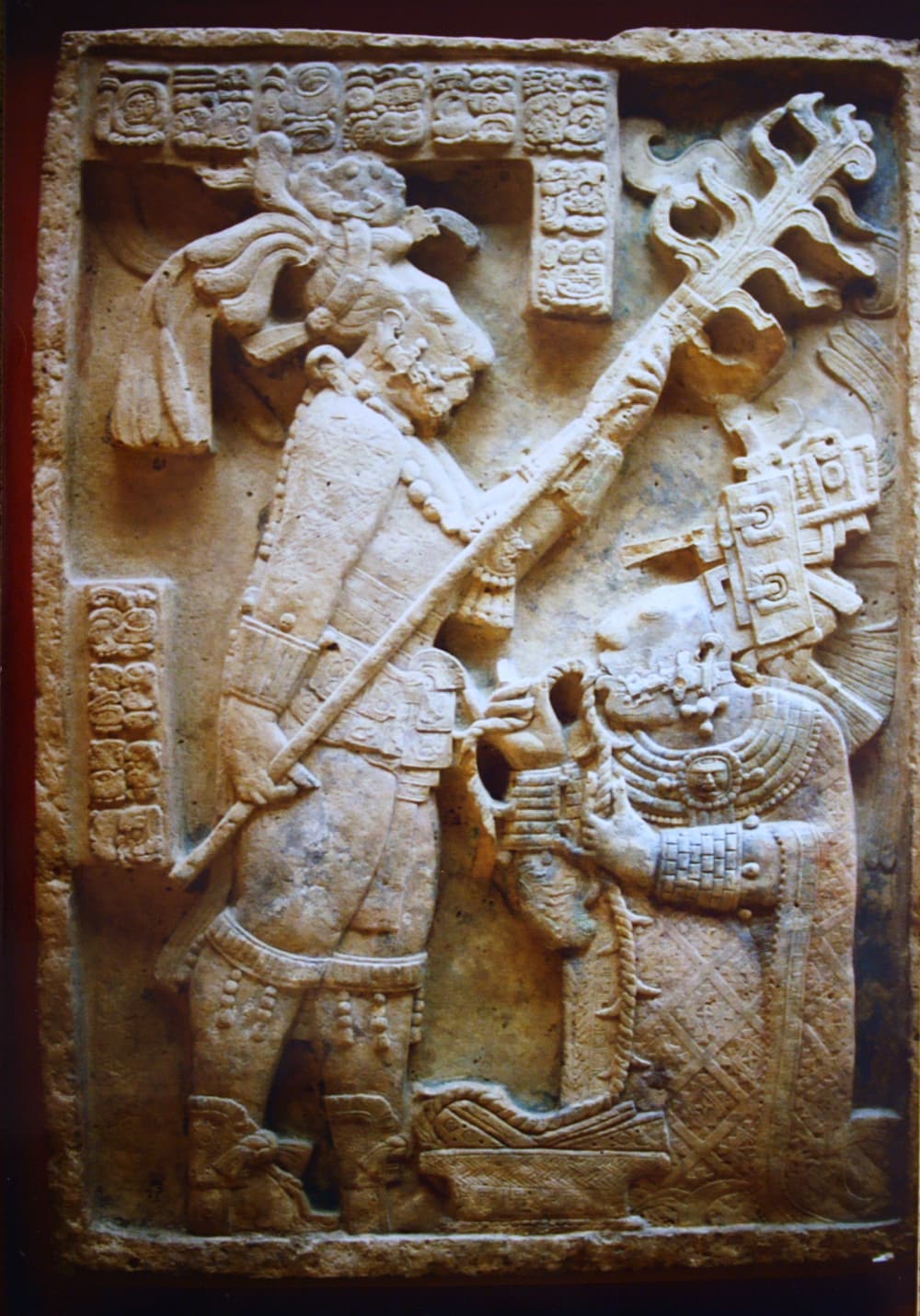 Yaxchilán archaeological zone
The Carved Lintels
Shield Jaguar, Lady Xoc and the vision serpent
Yaxchilán is famous for its carved stone lintels — the finest relief sculpture in the Maya world. The most celebrated, from Lady Xoc’s temple (Structure 23), are now in the British Museum and Mexico City, but dozens of others remain on site.
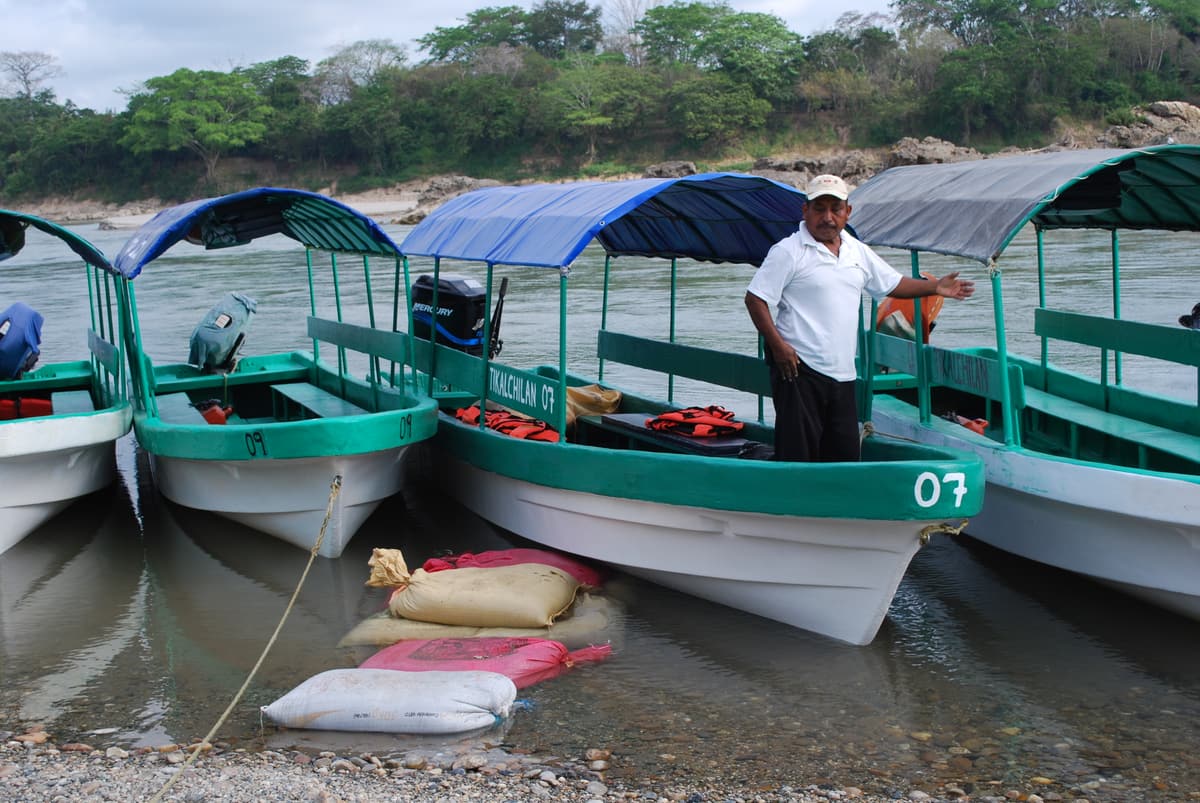 The Usumacinta & the Lacandon jungle
Frontera Corozal & the Usumacinta
Where the boats leave for Yaxchilán
A Ch’ol Maya river town on the Usumacinta, the border with Guatemala. Long covered lanchas leave from its jetty for the trip downstream to Yaxchilán, and for Bethel and La Técnica on the Guatemalan side.
See all of them, with directions and tours, in our things to see guide.
What it costs
Prices below are rough guides only — they change, and you should check current rates:
| Item | Typical price |
|---|---|
| Yaxchilán entrance (INAH) | Roughly in the 100-peso range for foreign visitors, cash on site — check current rates |
| Community fee, Frontera Corozal | A small fee per person, cash |
| Lancha to Yaxchilán and back | Priced per boat and shared between passengers — ask at the jetty |
| Bonampak entrance + Lacandon transport | Separate INAH ticket plus a community transport fee |
| Day tour from Palenque (Yaxchilán + Bonampak) | From roughly US$105 on GetYourGuide — compare on our tours page |
| Two-day tour with a jungle night | From roughly US$185 on GetYourGuide |
Safety
Yaxchilán itself is a peaceful, well-managed site, and thousands of visitors travel there each year, mostly on tours. The approach road, the Carretera Fronteriza, runs through a remote border region with military and immigration checkpoints. The security situation in parts of Chiapas can change, and some governments issue specific advice for the state: check your government’s current travel advice before you go, travel only in daylight, keep your passport with you and consider an organised tour. Community roadblocks occasionally delay traffic on routes in Chiapas; local operators usually know in advance.
Money, connectivity and practicalities
- Money: Mexican peso (MXN). Draw cash in Palenque — there are no reliable ATMs at Frontera Corozal or Lacanjá, and fees and boats are paid in cash.
- Language: Spanish, plus Ch’ol at Frontera Corozal and Lacandon Maya around Bonampak. A few phrases of Spanish go a long way.
- Connectivity: mobile signal is patchy along the border highway and weak at the ruins. Download offline maps.
- Health: use insect repellent and cover up at dusk; drink bottled or treated water; the heat and humidity are the main challenges.
- Documents: carry your passport and Mexican tourist permit (FMM or digital record) for checkpoints near the border.
Common mistakes
- Trying to visit Yaxchilán as a day trip from San Cristóbal — it is too far.
- Arriving at Frontera Corozal in the afternoon, with too little time at the ruins.
- Bringing too little cash — or forgetting a torch for the Labyrinth.
- Skipping insect repellent in the rainy season.
- Driving the border highway at night.