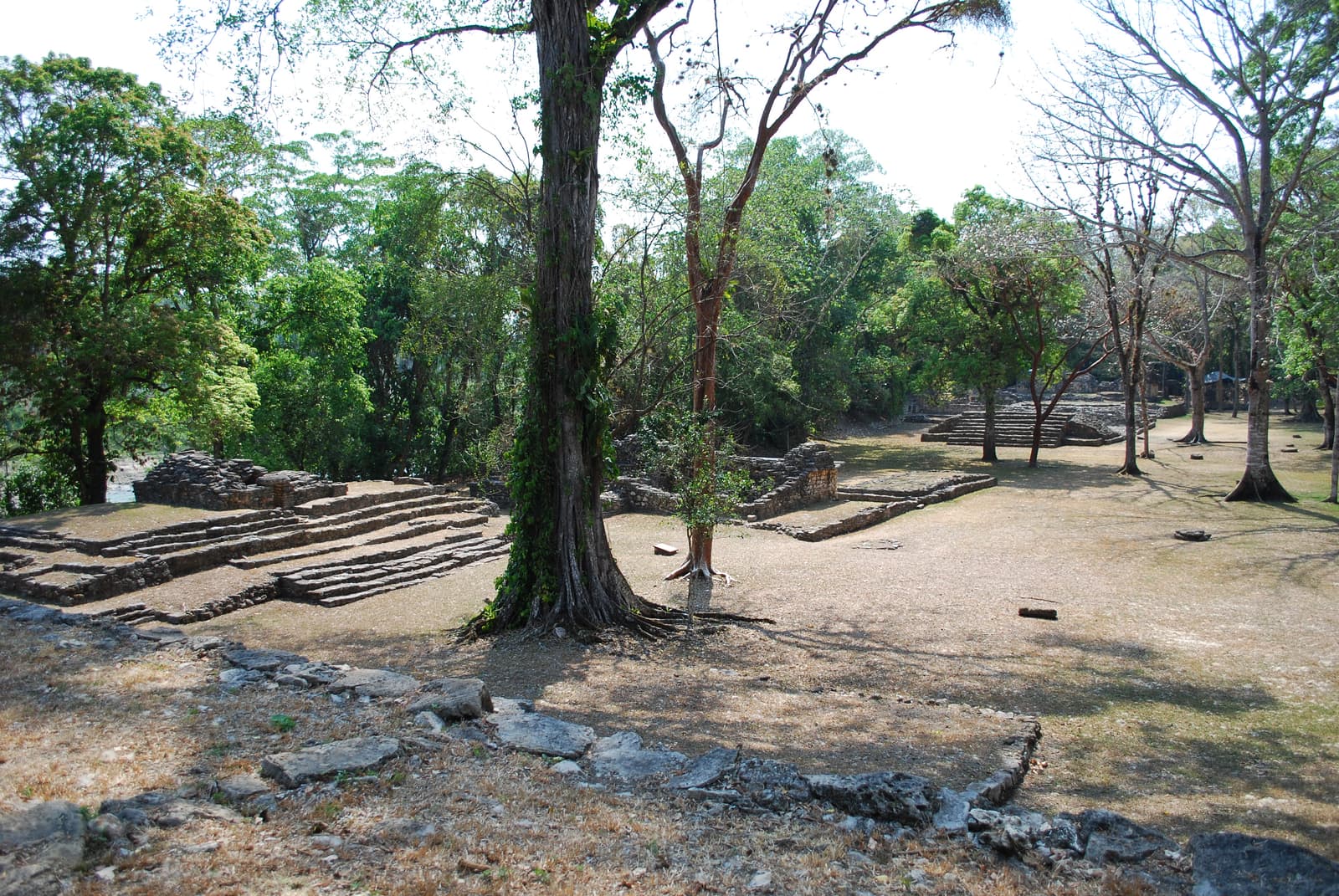
Yaxchilán spreads over a series of natural terraces and hills rising from the Usumacinta. The core — the Grand Plaza running along the river, the Great Acropolis with Structure 33 above it, and the South Acropolis on the highest hill — can be seen in two to three hours. The site is managed by Mexico’s INAH and is shaded by tall rainforest, which makes it far more pleasant in the heat than open sites.
The site at a glance
Timings are approximate for a relaxed visit; guides adjust them to your group.
| Area | What is there | Time to allow | Effort |
|---|---|---|---|
| Boat landing | Jetty, ticket control, first ceibas | 10 min | Short climb from the river |
| The Labyrinth (Structure 19) | Dark passages and bats, entrance to the plaza | 10–15 min | Easy; torch needed |
| Grand Plaza | Temples, stelae, ballcourt, Structure 23 (Lady Xoc) | 40 min | Flat |
| Structure 33 & Great Acropolis | Bird Jaguar IV’s temple, lintels, ballgame stairway | 30 min | Steep stairway |
| South Acropolis (Structures 39–41) | Highest group, forest views, stelae | 45 min | Long climb, often quiet |
| Small Acropolis | Residential and ritual buildings | 20 min | Moderate |
 Yaxchilán archaeological zone
 Yaxchilán archaeological zone
Structure 33
The temple of Bird Jaguar IV
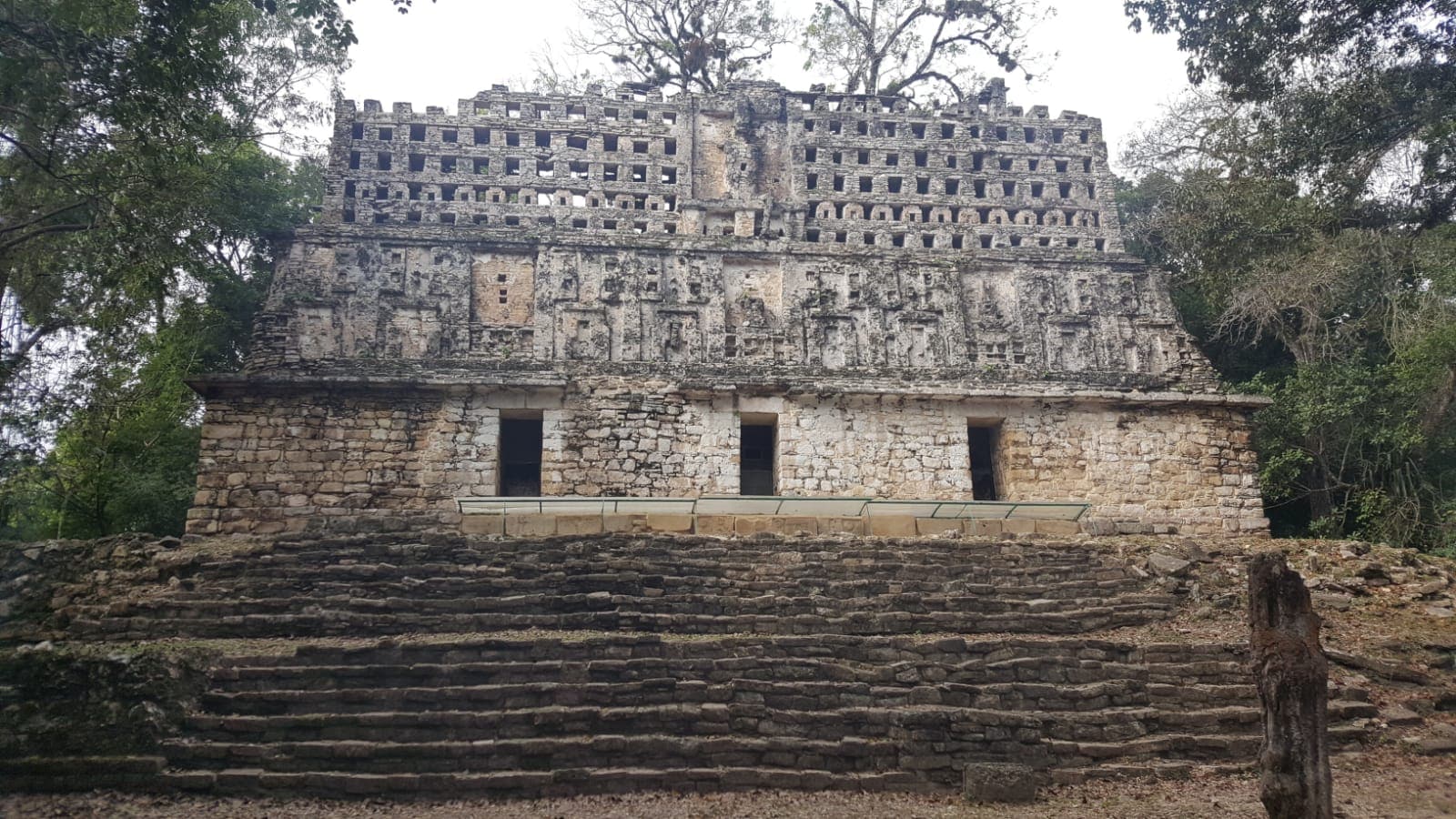
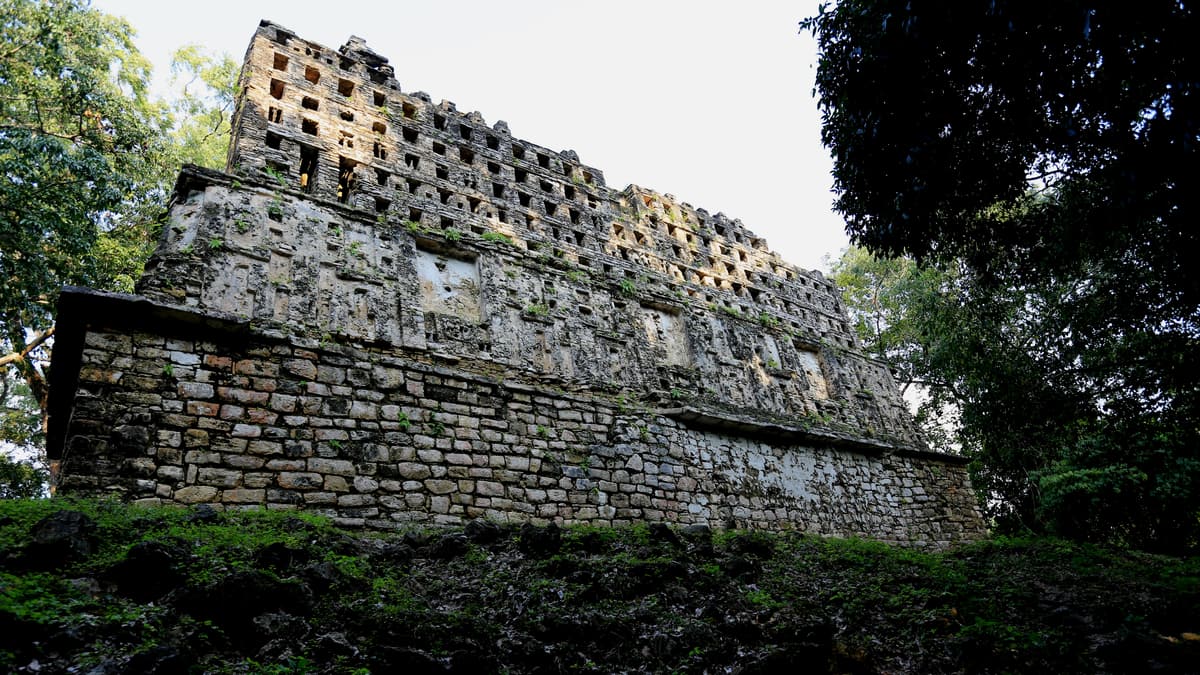
The masterpiece of Yaxchilán: a temple high above the Grand Plaza with a pierced roof comb, three carved lintels over its doorways and a hieroglyphic stairway showing the king playing the ballgame. Inside sits his headless stone statue.
 Yaxchilán archaeological zone
The Carved Lintels
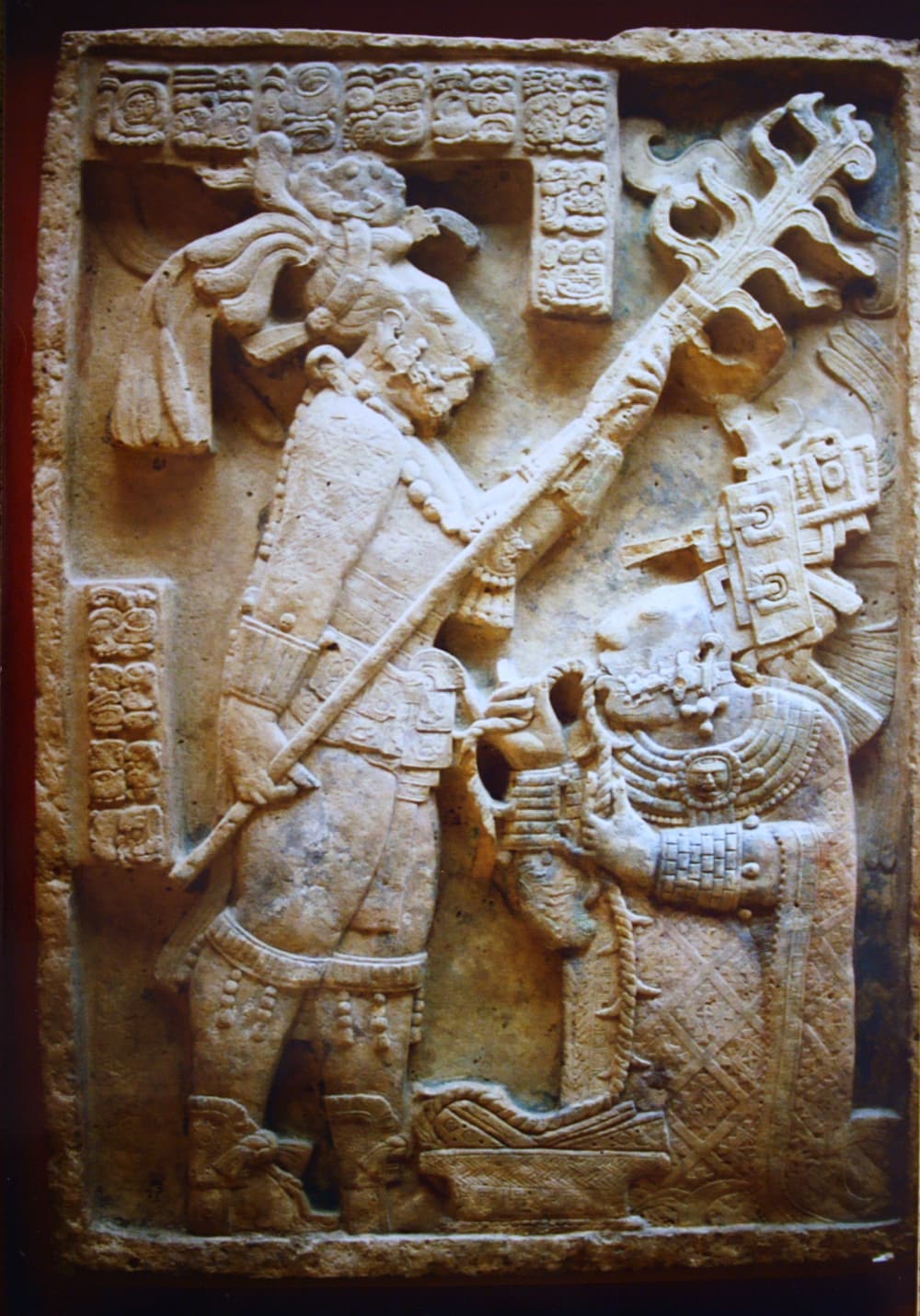
Shield Jaguar, Lady Xoc and the vision serpent
Yaxchilán is famous for its carved stone lintels — the finest relief sculpture in the Maya world. The most celebrated, from Lady Xoc’s temple (Structure 23), are now in the British Museum and Mexico City, but dozens of others remain on site.
 The Usumacinta & the Lacandon jungle
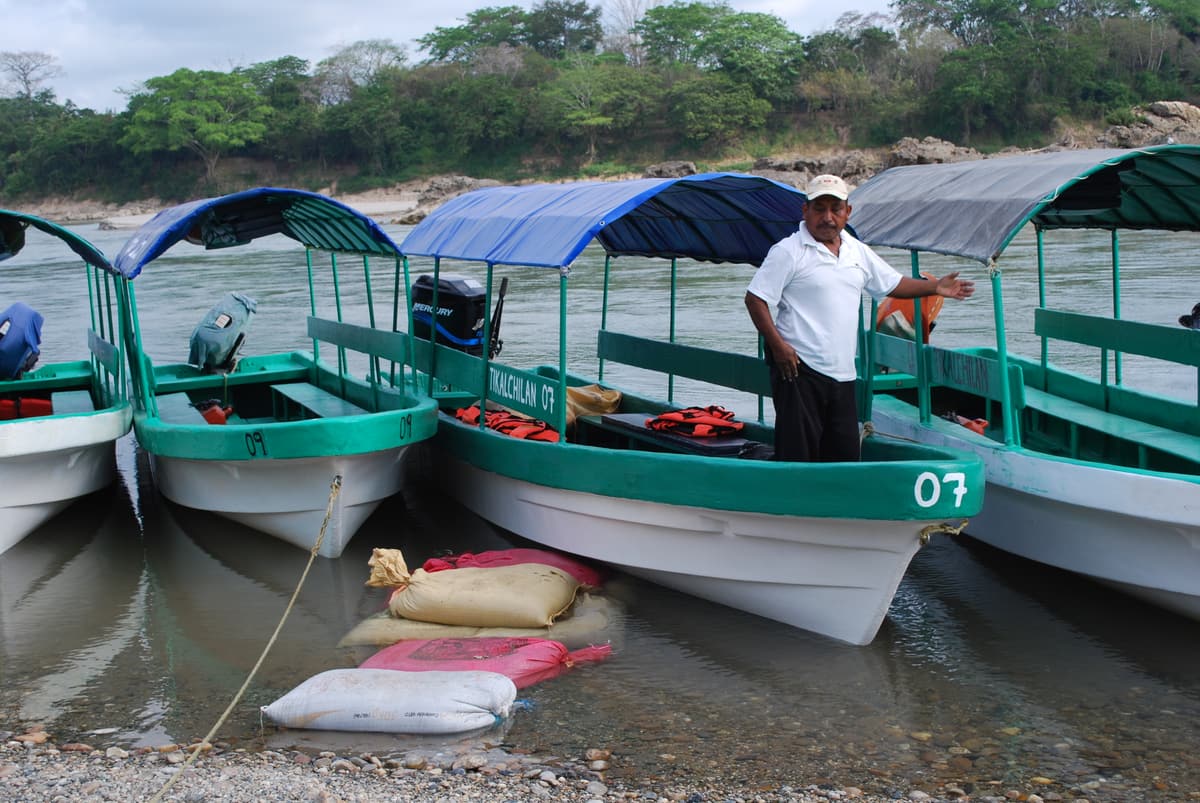
Frontera Corozal & the Usumacinta
Where the boats leave for Yaxchilán
A Ch’ol Maya river town on the Usumacinta, the border with Guatemala. Long covered lanchas leave from its jetty for the trip downstream to Yaxchilán, and for Bethel and La Técnica on the Guatemalan side.
A walk through Yaxchilán
1. The landing and the Labyrinth
The lancha drops you at a jetty below the site. A short path climbs to the ticket control and on to Structure 19, the Labyrinth: a building riddled with narrow, pitch-dark corridors and stairs, where bats hang from the vaults. Walk through with a torch and emerge onto the Grand Plaza — or take the path around it.
2. The Grand Plaza
A long, level plaza runs parallel to the river, framed by temples and palaces. Look for the stelae and altars, the ballcourt, and Structure 23, the temple of Lady K’ab’al Xook (Lady Xoc), whose lintels are now in London and Mexico City. Howler monkeys often feed in the ceibas here — you will hear them long before you see them.
3. Structure 33 and the Great Acropolis
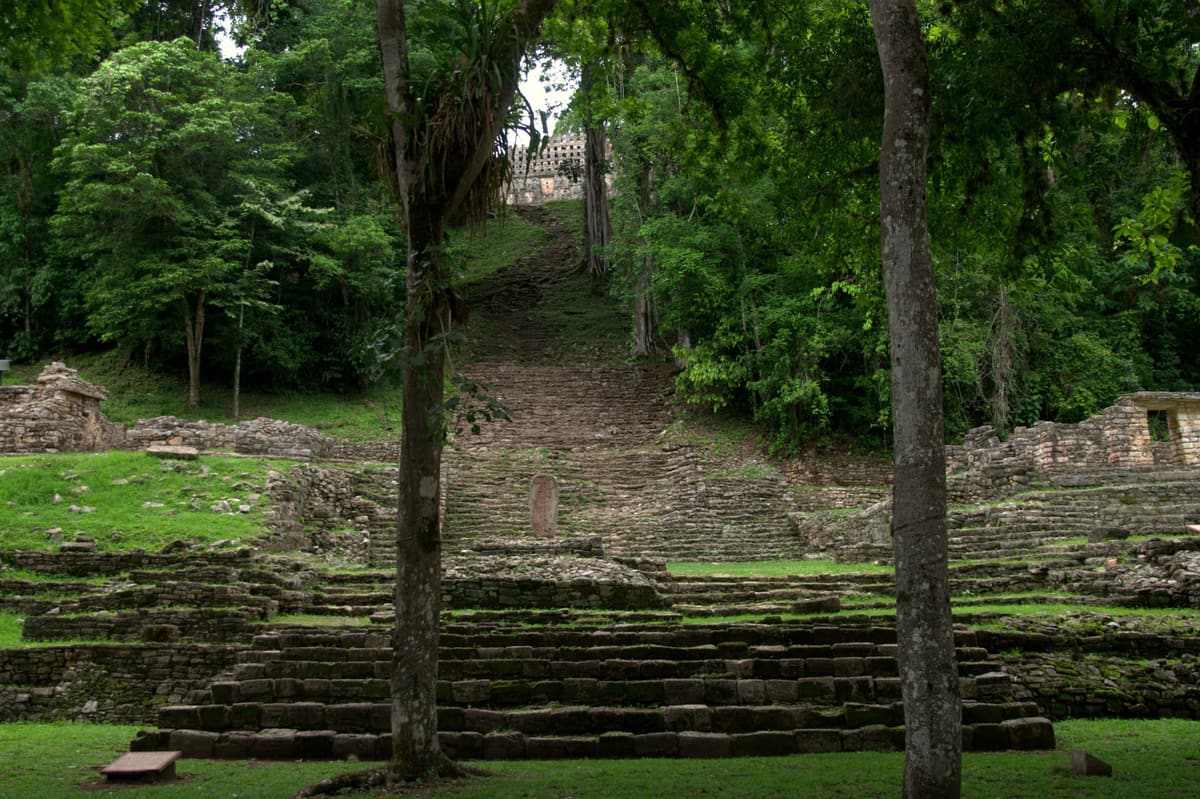
A steep stairway climbs from the plaza to Structure 33, dedicated by Bird Jaguar IV in the mid-8th century. Its roof comb is pierced like lace; carved lintels hang over the three doorways; the top step, Hieroglyphic Stairway 2, shows ballgame scenes; and inside sits the king’s headless statue. Neighbouring buildings of the Great Acropolis hold more lintels and stelae.
4. The South Acropolis
If your legs and schedule allow, follow the path uphill through the forest to the South Acropolis, the highest group at Yaxchilán. Structures 39, 40 and 41 stand on the hilltop among stelae showing Shield Jaguar and Bird Jaguar. Few day-trippers make it up here, and the silence is part of the reward.
The lintels: Yaxchilán’s great art
Yaxchilán’s kings commissioned carved stone lintels over their doorways — scenes of bloodletting rituals, visions, captures and dynastic ceremonies, with hieroglyphic captions. The most famous, Lintels 24 and 25 from Structure 23, show Lady Xoc performing a bloodletting rite and conjuring a vision serpent; they were removed by Alfred Maudslay in the 1880s and are in the British Museum. Lintel 26 is in the Museo Nacional de Antropología in Mexico City. Many others remain in place. See our guide to the lintels.
Hours, tickets and practical details
- Opening hours: the site is normally open daily from morning until late afternoon (typically around 8 a.m. to 5 p.m.). Last boats leave Frontera Corozal earlier — check locally.
- Tickets: an INAH entrance fee, payable on site in cash, plus a small community fee at Frontera Corozal. Prices change — check current rates. Many tours include them.
- Facilities: toilets near the landing; no restaurant at the site — bring water and snacks (and take your rubbish back).
- Guides: tours include a guide; independent visitors can sometimes hire a local guide at Frontera Corozal.
- Accessibility: the landing, stairways and forest paths are steep and uneven; the site is not suitable for wheelchairs.
What to bring
- A torch or phone light for the Labyrinth.
- Strong insect repellent — mosquitoes can be fierce, especially in the rainy season.
- At least a litre and a half of water per person, a hat and sunscreen for the boat.
- Shoes with grip: stairs and paths are slippery after rain.
- Cash in Mexican pesos for fees, the boat and tips.
- Your passport — there are checkpoints on the border highway.